
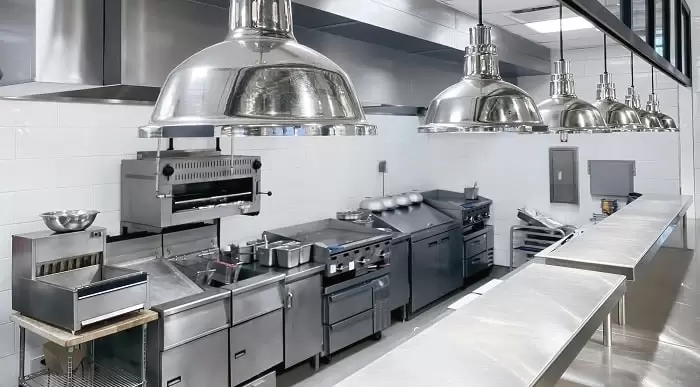
Financing your kitchen equipment lets you spread the cost over the life of the gear, so your cash stays available for wages, stock and rent. For a Parramatta owner, the real decision is whether to finance, lease or pay cash, and what each choice does to your weekly cash flow.
We work with hospitality owners who love their craft and want the numbers to back it up. This guide walks you through how the choice works.
What Is Commercial Kitchen Equipment Finance?
Commercial kitchen equipment finance is a loan or lease used to buy items such as ovens, fridges, grills and dishwashers, with the equipment itself usually acting as security for the lender. You make regular repayments over an agreed term instead of paying the full price upfront.
This is a form of equipment finance, and it sits within the wider group of plant and equipment loans. Because the lender holds security over the asset, rates can be lower than for an unsecured loan. Documentation requirements vary by lender and deal. The trade-off is that if you fall behind on repayments, the lender can take action over the equipment you rely on to trade.
Should You Finance, Lease or Pay Cash?
Financing suits you when you want to own the equipment and keep cash in the business. Leasing can suit you when you expect to upgrade often. Paying cash avoids interest but can leave you short when a quiet month hits.
Each path has a cost. Finance and leases add interest or fees on top of the purchase price. Cash ties up money you may need for the unexpected. Our lease vs buy comparison lets you put your own numbers side by side before you commit.
A Parramatta Cafe Upgrade: The Numbers Worked Through
Consider a Parramatta cafe owner who needs a new combi oven, two under-bench fridges and a commercial dishwasher, with a combined price of $60,000. Paying cash would use most of the savings set aside for wages and a slow winter.
The solution is an equipment loan over five years. At an illustrative rate of 6.75% p.a., the repayments come to roughly $1,181 a month. The actual rate you are offered depends on your lender, your business history and the equipment.
The outcome is that the owner keeps cash in the account, gets the kitchen running sooner and knows the exact repayment each month. The cost is the interest paid over the term, and the equipment is held as security until the loan is repaid. You can test your own figures with our asset finance repayment calculator.
Ready to get started?
Book a chat with a Finance & Mortgage Broker at Astute Ability Group today.
What Do Lenders Look at When You Buy Restaurant Equipment?
Lenders mainly want to see that your business can comfortably meet the repayments and that the equipment holds its value. They will look at your trading history, your existing debts and the type of equipment being bought.
New equipment from a supplier is usually more straightforward to value than a second-hand item bought privately. If your income is irregular or your paperwork is not up to date, a low doc loan may be worth discussing. Terms and rates vary by lender, and a broker can explain the options. A conversation with a broker before you apply helps you present your business in its strongest light.
How Does Buying Equipment for Business Affect Tax?
Some equipment purchases may have tax implications, but the outcome depends on your business structure, the asset and the rules that apply at the time. Nothing here is a promise of a particular result.
Because buying equipment for business tax purposes can be complicated, speak with your accountant before you sign anything. They can tell you how a purchase fits with your overall position. You can also try our tax savings calculator to get a feel for the numbers, then confirm the detail with your accountant.
Choosing the Right Loan Term for Restaurant Equipment
A sensible term is usually one that does not outlast the useful life of the equipment. A shorter term means higher repayments but less interest, while a longer term lowers repayments but costs more overall.
A commercial dishwasher or oven that is likely to need replacing in a few years should not be financed over a much longer period. Matching the term to the life of the gear helps you avoid still paying for something you have already replaced. If you are also financing a fit-out or a vehicle for deliveries, we can look at how each loan fits together so repayments do not crowd your cash flow.
Why Work With a Local Parramatta Broker?
A broker can compare options from a range of lenders and explain the trade-offs in plain language, so you are not left reading the fine print alone. Our Parramatta mortgage broker page shows how we support local owners and families.
A good broker also keeps the relationship going. When you open a second venue or upgrade the kitchen again, you already have someone who knows your story.