
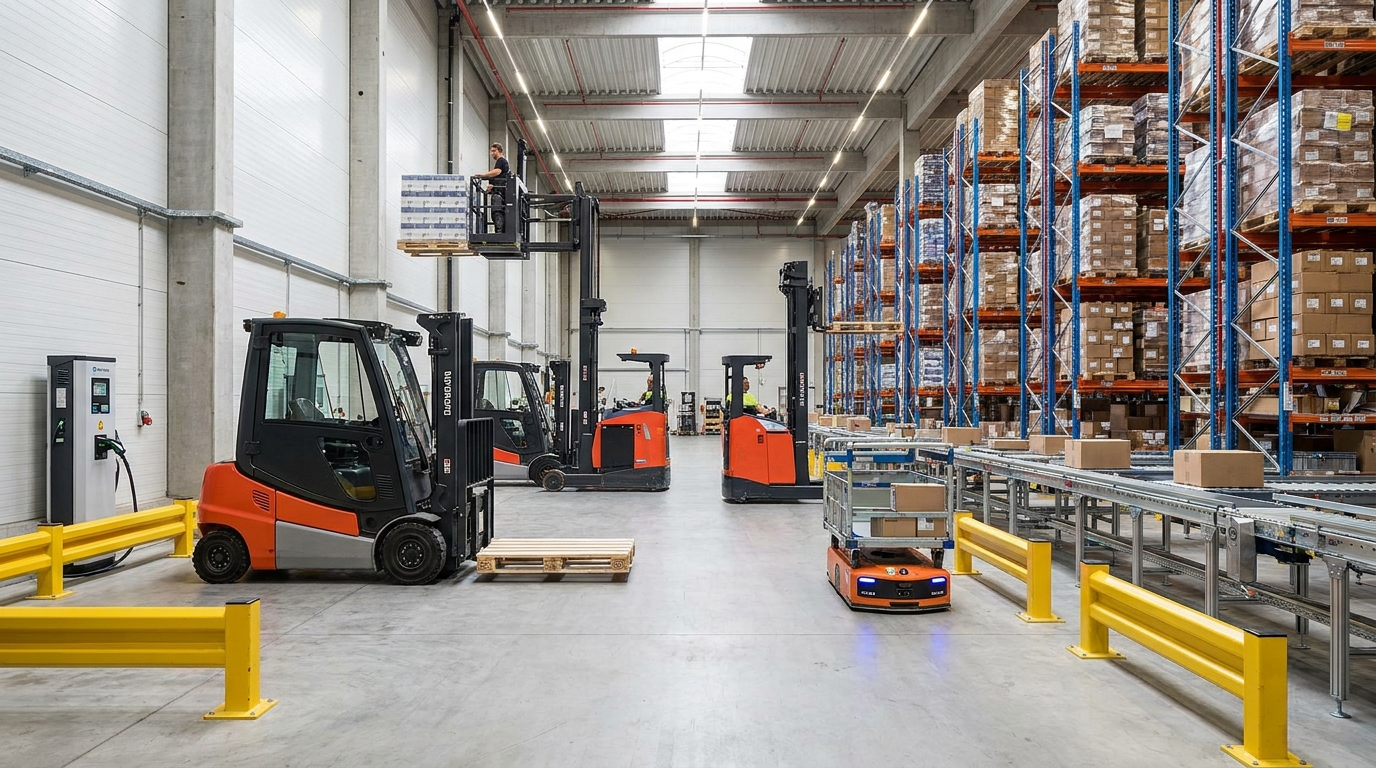
Warehouses in Mackay service industries from mining logistics to agricultural distribution, and the equipment that keeps them running isn't inexpensive.
Financing warehouse equipment the wrong way can lock your business into repayments that don't suit your trading cycle, tax structures that waste deductions, or terms that prevent you upgrading when technology changes. The right structure does the opposite: it protects cashflow during quieter months, maximises tax effectiveness, and keeps pace with how your operation grows.
Not Matching Repayment Terms to Your Trading Cycle
Warehouse operations in Mackay often experience seasonal variation tied to agricultural harvest periods, mining contract schedules, or retail distribution peaks. A finance structure with fixed monthly repayments that don't reflect this rhythm creates unnecessary pressure during slower months.
Consider a business operating a grain handling facility near the Mackay Port precinct. Revenue spikes sharply during harvest, then drops for several months. Structuring warehouse equipment finance with seasonal repayment flexibility means higher payments during peak months and reduced obligations when cash is tighter. Some lenders allow structured payment variations within a commercial agreement, while others offer payment deferrals or interest-only periods. The structure you choose should reflect your actual income pattern, not a generic monthly schedule.
Chattel mortgage and hire purchase agreements typically allow for tailored repayment schedules if negotiated upfront. If your warehouse handles temperature-controlled goods for the food processing sector or palletised freight for mining suppliers, your busiest months are predictable. Build that into your finance terms from the start.
Choosing the Wrong Finance Structure for Your Tax Position
The tax treatment of warehouse equipment varies depending on the finance structure you select, and the difference in deductibility can be significant.
Under a chattel mortgage, your business owns the equipment from day one. You claim depreciation on the asset and deduct the interest portion of repayments. If you're purchasing automation equipment, conveyor systems, or racking valued above the instant asset write-off threshold, this structure allows you to manage the depreciation schedule in line with your taxable income. For businesses with strong profitability, a chattel mortgage provides control over how and when deductions are claimed.
Under a hire purchase or lease arrangement, the ownership structure differs, as does the timing of deductions. Lease payments may be fully deductible as an operating expense, but you don't own the asset during the lease term. If your warehouse requires equipment that will need replacement or upgrading within a few years, such as IT systems or material handling robotics, a lease can be more tax effective than ownership.
The mistake is choosing a structure based on what sounds familiar rather than what aligns with your tax strategy. Speak with your accountant before committing to a finance type. The structure that works for a forklift purchase may not suit a solar installation on your warehouse roof.
Financing Equipment in Isolation Instead of as a Package
Warehouses rarely need just one piece of equipment. You might be upgrading three forklifts, replacing pallet racking, and installing a new warehouse management system simultaneously. Financing each item separately often results in multiple agreements, varied repayment dates, and higher overall interest costs.
Bundling related equipment into a single finance facility simplifies administration and often improves the rate. Lenders view a $200,000 package for integrated warehouse upgrades differently than five separate $40,000 requests. The larger loan amount can attract better terms, and a single monthly repayment is easier to manage than juggling multiple schedules.
Ready to chat to one of our team?
Book a chat with a Finance & Mortgage Broker at Astute Ability Group today.
Packaged finance also makes it easier to include ancillary costs such as installation, freight, and commissioning. If you're installing conveyor systems or automated storage, those setup costs can represent 15 to 20 percent of the equipment value. Financing them as part of the package means you're not drawing down working capital for what are still capital expenses.
When you approach a broker, provide a full list of what you're planning to acquire. Even if the purchases will occur over several months, structuring them under a single agreement with staggered drawdowns keeps your finance consolidated and your cashflow predictable.
Overlooking the Residual Value When Calculating Affordability
Some warehouse equipment holds strong resale value. Forklifts, scissor lifts, and certain material handling machinery retain a significant portion of their purchase price if maintained well. Other items, such as customised racking or specialised conveyor systems, have limited secondary markets.
When structuring finance with a residual or balloon payment, you're deferring a portion of the loan amount to the end of the term. This reduces your regular repayment and frees up cashflow during the loan period. But if the equipment's actual resale value at term end is lower than the residual you've committed to, you're left with a shortfall.
In our experience, businesses financing standard forklifts or pallet jacks can comfortably set a residual of 20 to 30 percent, knowing they can sell or trade the equipment to cover the balloon. Businesses financing bespoke automation or equipment specific to a single operational layout should avoid high residuals. If the gear can't be easily resold, the balloon becomes a lump sum you'll need to refinance or pay from reserves.
Calculate affordability based on the full loan amount, not just the monthly repayment. If the residual creates a future obligation your business can't meet without strain, reduce it or remove it entirely.
Limiting Your Options by Only Approaching Your Bank
Most Mackay warehouse operators have an established banking relationship, and it's natural to start there when looking for equipment finance. But banks represent one segment of the market, and their appetite for certain equipment types or business structures varies.
Specialist equipment financiers and non-bank lenders often provide better terms for plant and equipment, particularly when the gear is specialised or high-value. They understand residual values, industry-specific risks, and the useful life of warehouse equipment in ways that a general business banker might not. A lender that regularly finances cranes, conveyor systems, or refrigeration units will assess your application with more precision and less conservatism.
Working with a broker gives you access to a panel of lenders without needing to approach each one individually. We regularly structure commercial equipment finance for Mackay businesses across sectors from logistics to food processing, and the variance in rates, terms, and serviceability calculations between lenders is significant. One lender may require a 30 percent deposit on material handling equipment, while another will finance the full amount based on the same cashflow.
If your warehouse operates under a trust, company, or partnership structure, or if you're self-employed with variable income, a specialist lender is often more flexible than a traditional bank. Don't assume your current bank is your only option, and don't let familiarity override better terms elsewhere.
Warehouse equipment is a capital decision that affects your operation for years. The finance structure should support that decision, not complicate it. Call one of our team or book an appointment at a time that works for you.