
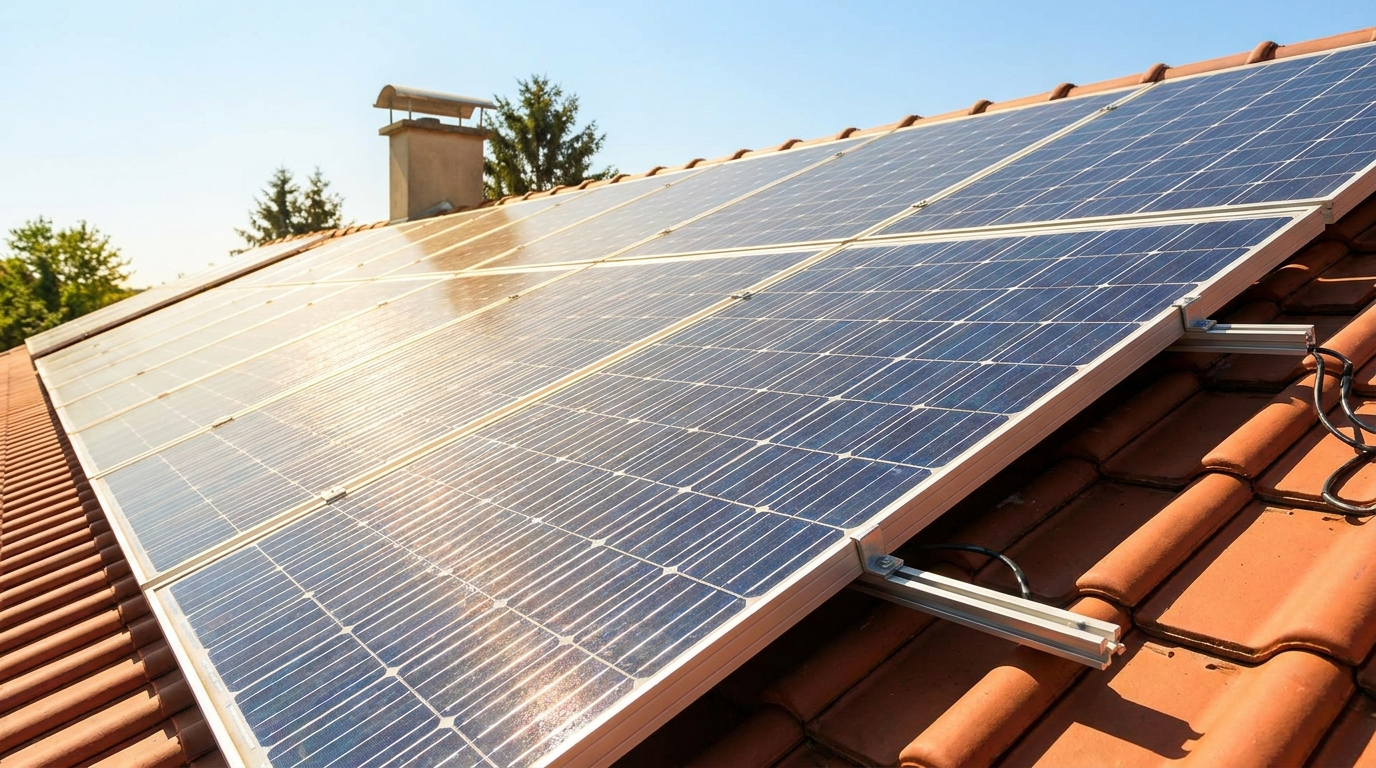
Your business can own commercial solar panels outright without using cash reserves.
Solar equipment finance allows you to purchase and install a complete system while spreading the cost across fixed monthly repayments that align with the energy savings you're generating. For Craigieburn businesses facing rising electricity costs in Melbourne's north, this approach turns a capital expense into a manageable operational payment while you start reducing power bills immediately.
Why Craigieburn Businesses Are Choosing Solar Now
Craigieburn sits in one of Victoria's fastest-growing industrial and commercial corridors, with manufacturing facilities, logistics operations, and retail businesses clustered around Craigieburn Road and the Hume Highway precinct. These operations typically run high electricity loads during business hours, which is exactly when solar generation peaks. Equipment finance structures let you capitalise on that timing without waiting years to save the purchase price in cash.
Consider a warehouse operation running climate control and materials handling equipment six days a week. A 100kW solar installation might cost between $80,000 and $120,000 depending on roof access and panel specifications. Through a chattel mortgage, that business finances the full amount, pays it down over five to seven years with fixed monthly repayments, and claims depreciation on the solar equipment while offsetting daytime grid consumption from day one. The reduction in quarterly power bills often covers a substantial portion of the repayment.
How Solar Equipment Finance Works in Practice
Solar equipment finance is structured as either a chattel mortgage or a commercial hire purchase. Under a chattel mortgage, your business owns the solar panels from installation and claims the GST input credit upfront if registered for GST. You make regular repayments that include both principal and interest, and the loan amount is secured against the solar equipment itself, which sits on your balance sheet as an asset. Depreciation deductions apply from the first year, and interest payments are typically tax deductible as a business expense.
A commercial hire purchase works differently in terms of ownership timing but achieves a similar outcome. You take possession and use the solar system immediately, make fixed repayments over the agreed term, and legal ownership transfers at the end once the final payment clears. Both structures preserve working capital and allow you to buy equipment without cash while the system generates savings and revenue offsets.
Ready to chat to one of our team?
Book a chat with a Finance & Mortgage Broker at Astute Ability Group today.
What Lenders Look for When Financing Solar Installations
Lenders assess solar equipment finance applications on the viability of your business, the quality of the solar installation, and whether the equipment will hold residual value as collateral. They want to see consistent revenue, a demonstrated ability to service repayments, and a solar proposal from an accredited installer with warranties on panels and inverters. The Clean Energy Council accreditation of your installer matters because it confirms the system meets Australian standards and qualifies for small-scale technology certificates, which reduce upfront costs.
Your business doesn't need to provide additional collateral beyond the solar equipment in most cases. The panels, inverters, mounting systems, and associated electrical infrastructure serve as security. Lenders may require a director's guarantee depending on your trading history and the loan amount, but the solar installation itself is the primary asset backing the facility. When we structure solar finance through business loans or dedicated equipment products, we're matching the repayment term to the expected lifespan and performance warranty of the system so the numbers make sense over the long run.
Tax Treatment and Deductibility of Solar Equipment
Solar panels qualify as plant and equipment under Australian tax law, which means they're depreciable assets. Depending on the size of the installation and the financial year in which it's installed, your business may be eligible for instant asset write-off provisions or accelerated depreciation schedules that allow you to claim a significant portion of the cost in the first year. Interest charges on the finance agreement are also tax deductible as a business operating expense, which reduces the effective cost of borrowing.
In a scenario where a food processing business in Craigieburn finances an $85,000 solar system using a chattel mortgage over six years, the business would claim the GST credit immediately, begin depreciating the asset, and deduct interest repayments each year. If eligible for instant asset write-off, the full $85,000 might be claimable in year one, delivering a substantial tax benefit that partially funds the following year's repayments. These deductions make solar equipment finance highly tax effective compared to paying cash, because financed equipment delivers both immediate operational savings and deferred tax advantages.
Choosing the Right Finance Structure for Your Solar Investment
The choice between a chattel mortgage and hire purchase depends on your business structure, tax position, and whether you want ownership from day one. A chattel mortgage suits businesses with strong cashflow and a desire to maximise tax deductions early, because you own the asset outright and start depreciating immediately. Hire purchase works well when you want lower documentation requirements or prefer ownership to transfer only after the term ends, though the tax treatment is often similar once the final payment is made.
When we work with Craigieburn clients on solar installations, we also consider whether splitting the finance makes sense. Some businesses separate the solar panels and inverters from battery storage or electrical upgrades, financing each component under different terms that reflect their replacement cycles. Inverters typically need replacing every ten to twelve years, while quality panels last 25 years or more, so structuring the loan amount to match the lifespan of each component avoids paying off equipment long after it's been replaced.
Aligning Repayments with Energy Savings and Cashflow
One advantage of financing solar rather than leasing or entering a power purchase agreement is that you control the asset and capture the full value of energy savings from installation. Your repayments are fixed and predictable, unlike electricity bills that fluctuate with usage and rate increases. For businesses that operate Monday to Friday during daylight hours, solar generation aligns almost perfectly with consumption, meaning you're drawing minimal grid power during peak rate periods.
Because solar equipment finance uses fixed monthly repayments, you can model the net cost after electricity savings before committing. If your current quarterly power bill sits around $12,000 and a solar system reduces that by 60% during daylight hours, you're saving roughly $7,200 per quarter or $2,400 per month. If your repayment on the financed system is $1,600 per month, the net cost is $800, and you're building equity in an asset that keeps producing for decades. That's the kind of cashflow friendly outcome that makes solar accessible to businesses that couldn't otherwise tie up six figures in capital expenditure.
Working with a Broker Who Understands Solar and Equipment Finance
Solar installations involve both technical and financial complexity that most business owners don't deal with regularly. You need an installer who understands your roof load, electrical capacity, and consumption patterns, and you need a finance provider who structures the loan to suit your tax position and cashflow cycle. We connect those pieces by working with accredited solar companies and lenders who specialise in asset finance for commercial energy projects, so the system is designed properly and the funding structure supports your business needs rather than working against them.
When you're ready to move forward with solar, call one of our team or book an appointment at a time that works for you. We'll help you compare finance options, confirm eligibility for any government incentives or tax concessions, and make sure the repayment structure aligns with the energy savings your system will deliver.