
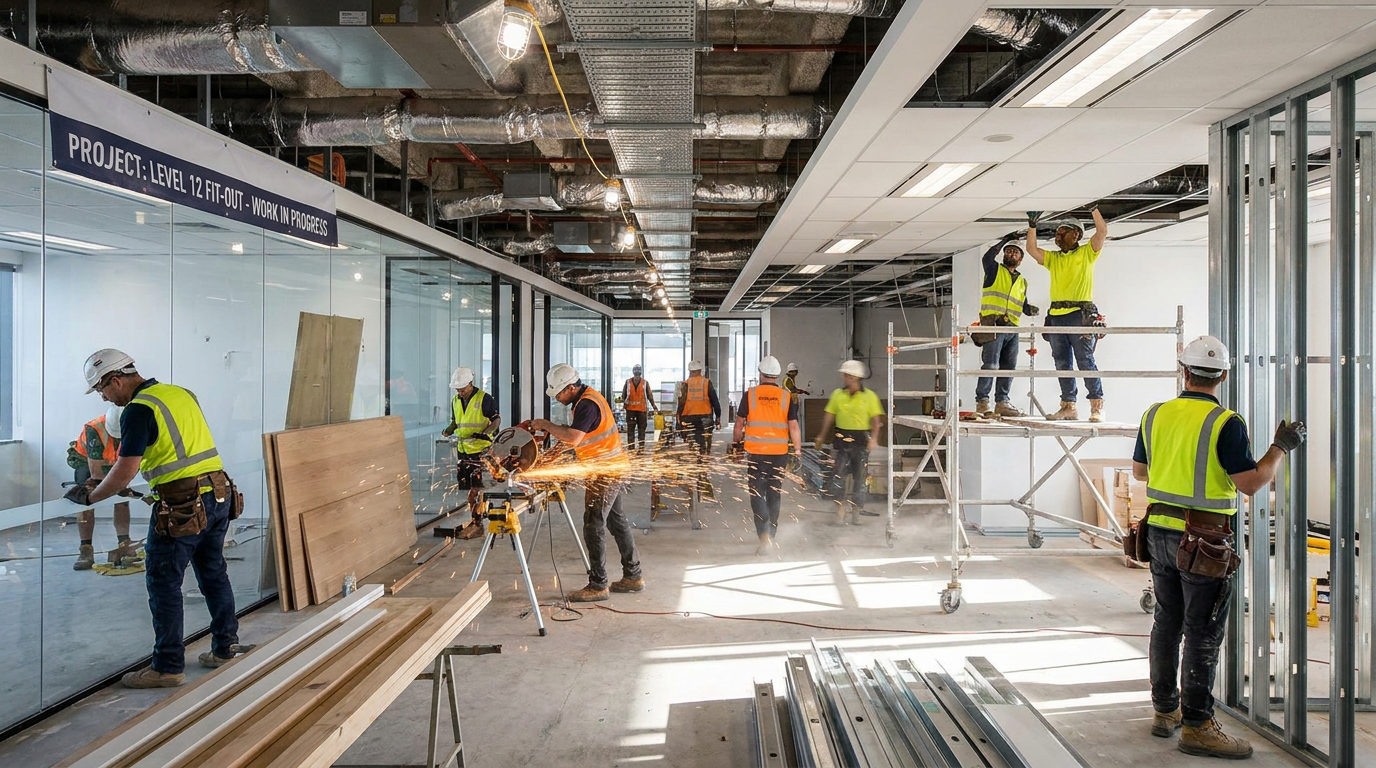
Fit out finance lets you spread the cost of transforming a commercial space across monthly repayments instead of paying everything upfront.
Whether you're setting up a new cafe on Lonsdale Street, upgrading a medical practice near Dandenong Hospital, or fitting out a manufacturing facility in the industrial precinct south of the railway line, the cost of transforming a bare shell into a working business can climb quickly. Cabinetry, lighting, flooring, refrigeration, point-of-sale systems, medical equipment, and office furniture all compete for the same pool of funds. Most businesses underestimate the gap between signing a lease and opening the doors, and that gap is where fit out finance earns its place.
Rather than depleting your operating account or tying up funds you'd planned to use for stock or wages, fit out finance structures the expense as a monthly repayment linked to the useful life of what you're installing. The lender advances the amount directly to your contractor or supplier, and you repay it over an agreed term, typically between two and seven years depending on what's being financed.
Why Fit Out Costs Often Exceed Early Estimates
The initial quote rarely covers everything. Once the lease is signed and the contractor starts work, you discover that the electrical board needs upgrading to handle the new kitchen equipment, or the air conditioning system specified in the original quote won't meet capacity during peak service hours. A hospitality fit out in Dandenong's CBD can start at one figure and end up 20% higher once compliance requirements, council permits, and last-minute design adjustments come into play.
Consider a scenario where a cafe operator budgets $80,000 for a fit out but ends up at $95,000 once the espresso machine, grinder, refrigerated display, extraction system, and custom joinery are finalised. If that operator has set aside $50,000 in savings, using all of it for the fit out leaves nothing for stock, staff wages during the first month, or the inevitable equipment repair that wasn't in anyone's budget. Fit out finance lets you preserve that $50,000, finance the full amount or the shortfall, and match repayments to revenue as the business starts generating income.
How Chattel Mortgage Structures Work for Commercial Fit Outs
A chattel mortgage is the most common structure for financing fit out costs because it allows you to claim depreciation on the assets and deduct the interest component of each repayment. The fit out items become your property from day one, and the lender takes security over those assets. You make fixed monthly repayments over the agreed term, and at the end, you own everything outright with no residual amount owing.
This structure works well when the fit out includes distinct assets such as kitchen equipment, medical devices, or office furniture that can be itemised and depreciated. For a medical practice purchasing diagnostic equipment, treatment chairs, and cabinetry, the chattel mortgage provides a clear depreciation schedule and tax treatment. The interest rate depends on the loan amount, the strength of your business financials, and whether you're providing additional security, but the structure itself remains consistent.
If your fit out includes items with different useful lives, such as technology that will be replaced in three years alongside joinery that will last a decade, you can structure separate agreements rather than forcing everything into a single repayment term. That flexibility is one reason we see chattel mortgages used more often than operating leases for fit outs, where ownership and depreciation matter.
Ready to chat to one of our team?
Book a chat with a Finance & Mortgage Broker at Astute Ability Group today.
When a Balloon Payment Reduces Monthly Pressure
A balloon payment defers part of the principal to the end of the loan term, reducing the amount you repay each month during the life of the lease. If cashflow is constrained in the first 12 months while the business builds its customer base, a balloon payment can lower early repayments and give you room to cover wages, stock, and rent.
In a scenario where a new physiotherapy clinic in Dandenong North finances $120,000 worth of treatment tables, exercise equipment, ultrasound machines, and reception fit out, monthly repayments on a five-year term with no balloon might sit around $2,300. With a 30% balloon payment, those monthly repayments drop closer to $1,700, freeing up $600 each month during the critical start-up phase. At the end of five years, you either pay the balloon amount, refinance it, or trade in the equipment and use the proceeds to clear the balance.
The trade-off is that you pay more interest overall because you're carrying a larger balance for longer, but for businesses where early cashflow is uncertain, the lower monthly repayment can mean the difference between meeting payroll and dipping into emergency reserves.
Vendor Finance and Dealer Finance Compared to Bank Lending
Vendor finance is arranged through the company supplying your fit out or equipment, while dealer finance is offered by specialist lenders who work with specific suppliers. Both can approve funding quickly, sometimes within 24 to 48 hours, and often require less documentation than a traditional bank application. That speed comes with higher interest rates and less flexibility around early repayment or restructuring.
When we work with clients financing fit outs through asset finance options from banks and lenders across Australia, we're comparing rates, terms, and conditions from multiple sources. A bank might offer a lower interest rate but take two weeks to settle, while a vendor finance arrangement settles in three days but costs an additional 2% per annum. If your lease commencement date is fixed and the contractor won't start without a deposit, vendor finance can be the right call even at a higher rate. If you have six weeks before work begins, a bank lender usually delivers lower repayments over the life of the loan.
The key is knowing which lender will approve your scenario. A hospitality business with 18 months of trading history might not meet a major bank's criteria but will be acceptable to a non-bank lender specialising in commercial equipment finance. We access both, and that range matters when your fit out timeline is tight.
How Equipment Leasing Differs from Purchase Structures
An equipment lease, whether a finance lease or operating lease, means you don't own the assets during the lease term. You make regular repayments, and at the end, you either return the equipment, upgrade to newer items, or purchase it for a residual value. Operating leases are common for technology that becomes outdated quickly, such as point-of-sale systems or office computers, where upgrading every three years aligns with your business needs.
For a fit out, operating leases are less common because most businesses want to own the cabinetry, lighting, and fixed equipment rather than hand it back at the end of a term. A finance lease functions more like a chattel mortgage in practice, with ownership transferring at the end, but the accounting treatment differs and can affect how the liability appears on your balance sheet. If your business is seeking additional funding or planning to sell within a few years, the structure you choose now will influence how your financials are assessed later.
We structure fit out funding based on what you're installing, how long it will last, and whether you plan to own, upgrade, or refinance down the line. If you're fitting out a leased premises with a five-year lease term, aligning the finance term to that lease period ensures you're not making repayments on equipment after you've vacated the space.
Why Preserving Working Capital Matters More Than Minimising Interest
Paying cash for a fit out eliminates interest costs, but it also eliminates flexibility. Once that cash is spent, it's not available for stock, marketing, wage increases, or the inevitable equipment failure that wasn't budgeted. We regularly see businesses prioritise saving a few thousand dollars in interest and then struggle to cover operating expenses in the first six months.
Fit out finance isn't about avoiding cost; it's about matching expense to revenue over time. If your fit out enables you to serve more customers, hire additional staff, or deliver services you couldn't offer before, the revenue it generates will exceed the interest cost. The question isn't whether financing costs more than paying cash. The question is whether financing gives you the breathing room to build the business without constantly worrying about the bank balance.
For businesses in Dandenong's manufacturing and logistics sectors, where a warehouse fit out might include racking systems, forklifts, office space, and loading equipment, the upfront cost can reach several hundred thousand dollars. Financing that amount over five to seven years with fixed monthly repayments lets you plan around a known expense rather than hoping revenue covers everything before the next bill arrives.
Upgrading Existing Equipment During a Fit Out
If you're already operating and planning a fit out to expand or modernise, you can often include the cost of replacing outdated equipment in the same finance application. A medical practice upgrading its fit out might replace ageing diagnostic machines, add new treatment rooms, and install updated reception furniture all under one agreement. Consolidating those costs into a single repayment stream simplifies your accounts and often secures a lower rate than financing each item separately.
The lender assesses the combined value and useful life of everything being financed, and structures repayments accordingly. If part of the fit out is cosmetic, such as flooring or painting, and part is functional, such as kitchen equipment or medical devices, the lender will want an itemised list to confirm the total value and ensure the security is sufficient. We prepare that documentation and liaise with your contractor or supplier to ensure the lender receives the invoices and payment requests in the format they require.
That coordination removes the back-and-forth between you, the contractor, and the lender, and ensures funding settles on time so the work can proceed without delays. For businesses managing equipment finance alongside a fit out, having one broker handle both simplifies the process and often results in faster approval.
How We Structure Fit Out Finance for Dandenong Businesses
We start by understanding the lease term, the nature of the fit out, and how the business generates revenue. A cafe in central Dandenong has different cashflow patterns to a medical practice or a logistics company fitting out a warehouse near Eastlink. The finance structure reflects that difference.
Once we know what's being financed, we compare rates and terms from banks, non-bank lenders, and specialist equipment financiers. We present options with different repayment amounts, terms, and balloon structures so you can see the monthly impact of each. If your priority is keeping repayments low, we structure accordingly. If your priority is owning everything outright in the shortest time, we adjust the term and remove the balloon.
We also manage the settlement process, ensuring the lender releases funds to your contractor or supplier when the work is complete or the equipment is delivered. That timing protects you from paying for something before it's installed and ensures the lender's security is in place before funds are advanced.
Call one of our team or book an appointment at a time that works for you. We'll assess your fit out requirements, compare lenders, and structure a repayment plan that aligns with your cashflow and business goals.